


An interstate relocation puts a company’s equipment, inventory, and office assets on a truck for hundreds or thousands of miles, which raises the stakes well beyond what a short trip across town would involve. Milwaukee movers handling long-distance freight have to think differently about packing, loading, and tracking than a crew built for quick in-town jobs. The methods below outline how that protection actually works once a shipment leaves Wisconsin and heads toward another state.
Shipping Equipment or Inventory Across State Lines?
Get a damage-free interstate moving plan built for your business assets.
Commercial-Grade Packing Materials
The biggest difference between a short hop and a true interstate haul is vibration and time. A crate that holds up fine for twenty minutes on local roads can loosen, shift, or crack open after eight hours on the interstate. Movers in Milwaukee WI working interstate freight typically use double-wall cartons, reinforced crating for electronics or machinery, and moisture barriers for anything sensitive to temperature swings during a multi-day haul. Padding and blanket-wrapping get applied to furniture, displays, and equipment edges that would otherwise rub against each other for the length of the trip.
Packing choices also depend on what’s actually being shipped. A pallet of finished inventory needs shrink-wrap and corner protectors to survive forklift handling at multiple stops, while server racks or precision equipment often call for custom foam inserts and shock-absorbing crates. Crews who run interstate freight regularly tend to keep a wider range of materials on hand than a typical moving outfit simply because the range of cargo they handle is wider too.
Load Planning and Securement
Packing only solves half the problem — the other half is how the load gets arranged and locked down inside the trailer. Crews trained for long-distance freight build the load in sequence, placing heavier items low and toward the front of the trailer, then use load bars, strapping, and dunnage to keep everything from sliding during stops, turns, and the inevitable uneven stretch of highway. A trailer packed without this kind of sequencing might survive a ten-mile trip; it rarely survives a run that crosses two or three states without something shifting.
Don’t Leave Load Securement to Chance. Ask about how trailers are sequenced and secured for multi-state freight runs. Talk to a Specialist Today
Inventory Tracking from Pickup to Delivery
Long hauls also mean longer windows where a business owner has no direct eyes on their shipment. To close that gap, moving services Milwaukee companies rely on often involve a detailed inventory taken at pickup (item by item, with condition noted), so that anything unloaded at the destination can be checked against the original list. That documentation matters twice: it gives the crew a checklist to confirm nothing was left behind, and it gives the customer a record to compare against if anything needs to be addressed after delivery.
Insurance and Valuation Coverage
Even with careful packing and load securement, interstate shipments carry enough variables (weather, road conditions, multiple handling points), that valuation coverage is a standard part of the process rather than an afterthought. Reputable interstate carriers walk customers through coverage options before pickup, so there’s a clear understanding of what’s protected and at what level if anything is damaged in transit. For a business shipping high-value equipment, that conversation upfront tends to prevent disputes later and gives ownership a clear picture of what’s covered versus what might need a separate rider.
Experienced Drivers and Handling Crews
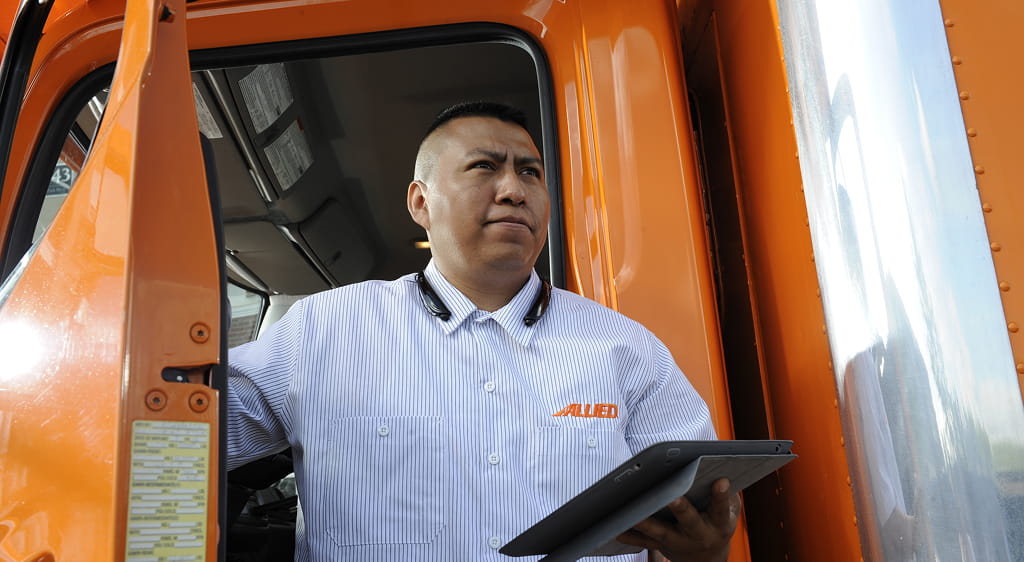
The final piece is simply experience. Drivers who run interstate routes regularly know how to manage fuel stops, weigh stations, and overnight layovers without disrupting the load, and loading crews who specialize in long-distance freight handle awkward or fragile items differently than a crew used to short residential hops. That specialization is part of why dedicated interstate movers tend to have far lower damage rates than general-purpose moving outfits. Many of these crews have also handled enough cross-country runs to anticipate problems before they happen, whether it’s rerouting around a storm system, adjusting tie-downs after a fuel stop, or flagging a pallet that looks like it needs re-securing before the next leg of the trip.
Plan Your Interstate Move With Confidence. Get matched with an experienced crew that handles long-distance freight every week. Get Started Now!
Ready to Move Your Business Forward?
Protecting a shipment across state lines takes a process built specifically for the demands of long-distance freight. Reebie Allied brings that process to every interstate move it handles out of Wisconsin. Get a free quote online now to start planning a relocation that gets your equipment and inventory where they need to go, intact and on schedule.